
Storage answer
Fridge, counter, or freezer?
- Best move
- Move rice into shallow containers, cool it promptly, label the date, and refrigerate at 40 F or below.
- Room temp
- Do not save cooked rice that sat out for more than 2 hours, or more than 1 hour above 90 F.
- Fridge
- Use safely cooled cooked rice within 3 to 4 days.
- Freezer
- Freeze rice you will not use within the refrigerator window; best quality is usually earlier, about 1 to 2 months.
Do not keep it if you see
- More than 3 to 4 days in the fridge
- Unknown storage history
- Left out too long
- Mold, slime, odd smell, or any reason to pause
Day-old rice is good for fried rice only when it was cooled quickly, refrigerated promptly, and kept cold.
Start Here
The rice is useful only if you cool it well
Learning how to store cooked rice is less about perfect meal prep and more about keeping a very useful dinner helper safe enough to trust. Rice can become fried rice, a chicken rice bowl, soup filler, burrito bowls, or a quick lunch, but only if it was cooled and stored properly first.
For a U.S. home-kitchen rule, use cooked rice within 3 to 4 days when it has been cooled quickly, stored in the refrigerator at 40 F or below, and reheated thoroughly. If it sat out for more than 2 hours, or more than 1 hour in hot weather above 90 F, do not save it for later.
Mara’s move is simple: scoop the rice out of the cooker or pot, spread it into shallow containers, label the date, and decide its next job before it turns into a cold mystery block.
Quick Answer
How long does cooked rice last in the fridge?
Cooked rice lasts 3 to 4 days in the fridge under U.S. guidance when it has been handled safely. That means it was refrigerated promptly in small or shallow portions and your refrigerator is holding 40 F or below. Use or freeze it sooner when you can.
University of Maine Cooperative Extension gives that 3-to-4-day window specifically for cooked rice. The UK Food Standards Agency gives more conservative rice-specific advice: cool it as quickly as possible, ideally within one hour, refrigerate for no more than one day, and reheat only once.
If the rice is already near day four and you do not have a plan, freeze it or let it go. Rice is inexpensive; a questionable container is not worth building dinner around.
| Rice Situation | Best Move | Why |
|---|---|---|
| Freshly cooked rice | Portion into shallow containers and refrigerate promptly | Small amounts cool faster than a deep pot. |
| Rice stored safely for 1 to 2 days | Use for bowls, soup, or fried rice | Texture is usually still flexible. |
| Rice stored safely for 3 to 4 days | Use or freeze before the window closes | Appearance alone cannot establish safety; this is the end of the U.S. leftover window. |
| Rice left out more than 2 hours, or 1 hour above 90 F | Do not save it | Reheating cannot fix every storage mistake. |
| Rice with no date or unclear storage | Do not use it as a dinner base | You cannot smell or see every safety problem. |
Why It Matters
Rice needs more respect than the average leftover
Cooked rice is not scary, but it is one of the leftovers that asks for good habits. The concern is Bacillus cereus, a bacterium associated with starchy foods like rice and pasta. A CDC outbreak note on fried rice explains that spores can survive cooking and that room-temperature holding can allow toxin production.
That is why the storage history matters more than the reheating method. If rice cooled safely and stayed cold, it can be useful. If it sat on the counter, in the rice cooker, or in a deep pot for too long, do not ask a hot skillet to make it safe again.
Ohio State University Extension notes that Bacillus cereus and its toxin cannot be seen, smelled, or tasted. That is the part I keep in mind when a container looks fine but I cannot remember when I made it.
Cool It
How to cool cooked rice safely
The goal is to move rice out of the warm middle zone quickly. Do not leave a whole pot of rice on the stove while you clean the kitchen, answer messages, or talk yourself into dealing with it later.
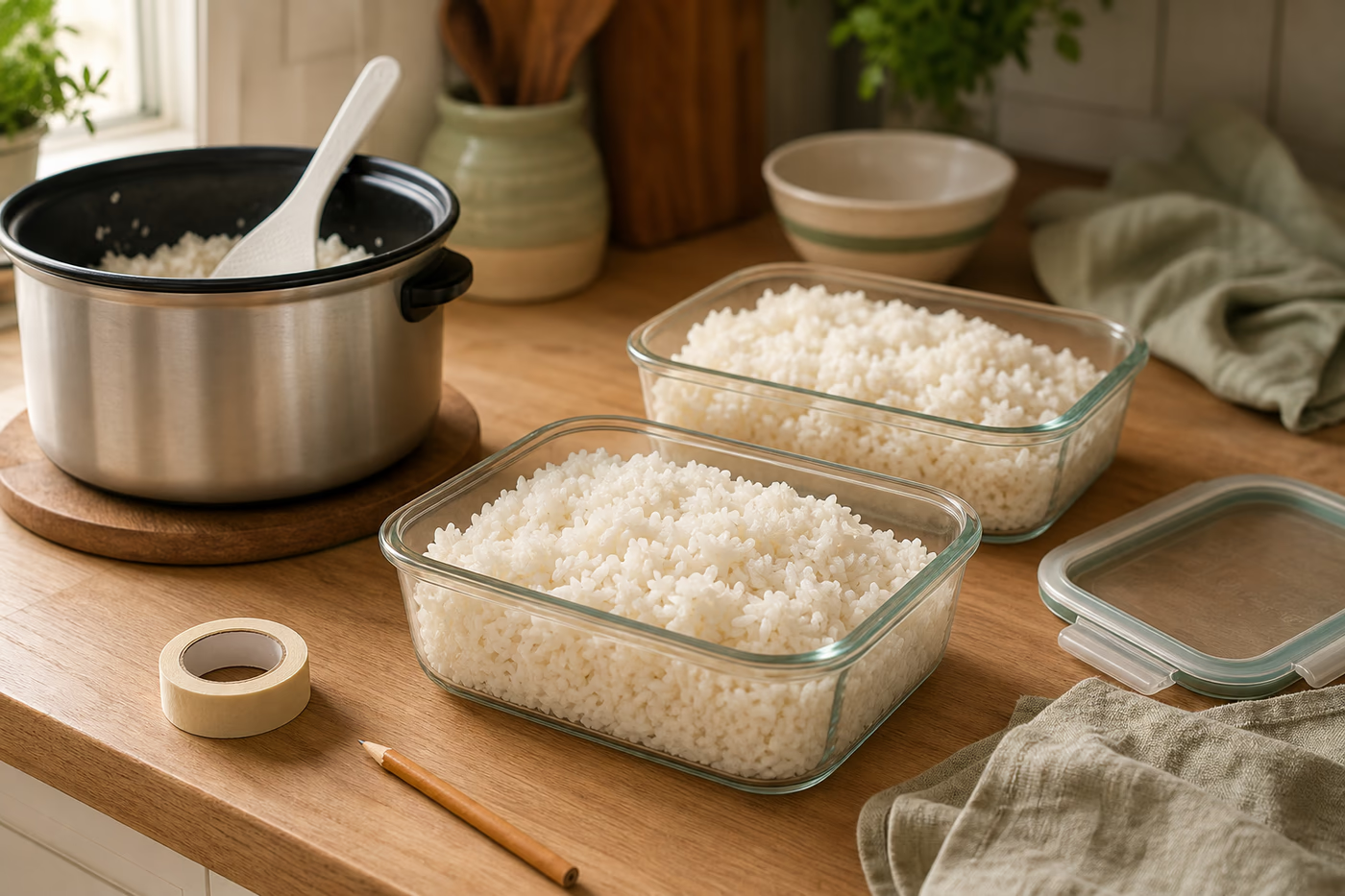
- Scoop it out of the pot. Move rice into small, shallow containers instead of storing it in a deep pot or rice-cooker insert.
- Spread it loosely. A thinner layer cools faster than a compact mound. Use two containers if the batch is large.
- Refrigerate promptly. Put the small portions in the fridge without waiting for them to cool completely on the counter. Keep total room-temperature time under 2 hours, or under 1 hour when the room or outdoor setting is above 90 F.
- Cover as the rice chills. Use clean food-storage containers and leave space around them so cold air can circulate.
- Label the date. Tape and pencil are enough. Future you should not need to guess.
FoodSafety.gov’s chill guidance says leftovers should go into shallow containers and be refrigerated promptly. For rice, that simple move is the whole system.
Fridge Storage
How to store cooked rice in the fridge
Use clean, shallow food-storage containers and keep the rice cold. Glass makes the rice easy to see, but the small portion and shallow shape matter more than the container material. Refrigerate promptly and keep it covered as it chills.
- Use shallow containers: wide and low beats deep and crowded.
- Store plain rice separately: a dish with meat, seafood, eggs, or creamy sauce follows the shortest applicable storage window. Count earlier storage time for those ingredients too; mixing does not make them fresh again.
- Put a date on it: write the cooked date, not the day you remembered it existed.
- Keep it cold: the fridge should stay at 40 F or below.
- Use clean utensils: do not dip back in with the spoon that touched raw meat, eggs, or someone’s plate.
If you keep a leftover landing zone, rice belongs near the front with the other eat-first food. It should be easy to find while it is still useful.
Freeze It
Can you freeze cooked rice?
Yes, you can freeze cooked rice. Freeze it when you know you will not use it within the 3 to 4 day refrigerator window, or when you intentionally cooked extra for future dinners.
For best texture, freeze rice in meal-size portions while it is fresh, not when it is already dry and tired. Press freezer bags flat or use shallow containers so the rice freezes and reheats evenly. Label the date and amount.
| Freezer Format | Best For | Reheat Move |
|---|---|---|
| Flat freezer bag | Fast thawing and tight freezer storage | Microwave from frozen with a splash of water, or thaw in the fridge. |
| Shallow container | Families, soup nights, or bowl bases | Reheat covered with moisture to 165 F throughout. |
| Single portions | Lunch bowls and quick fried rice | Use only what you need so the rest stays frozen. |
Rice handled safely before freezing and kept continuously frozen at 0 F or below remains safe indefinitely, though quality declines. I like to plan frozen rice into the next month or two for texture. For a cautious plan, count the rice’s refrigerator time before freezing and after it begins thawing; freezing does not give leftovers a fresh 3-to-4-day window. If you do not know how long it was stored before freezing, do not guess.
For tracking what is waiting in the freezer, use the freezer inventory sheet and write the dinner job beside the rice: fried rice, soup, burrito bowls, or quick rice bowls.
Reheat
How to reheat rice without drying it out
Rice usually needs moisture when it reheats. Whichever method you choose, reheat safely stored rice to 165 F throughout and check with a food thermometer. The texture goal is steam, not scorch.
Microwave
Put rice in a microwave-safe bowl, sprinkle with 1 to 2 tablespoons water per cup of rice, cover loosely, and microwave in short bursts. Stir, let it stand briefly, and heat until it reaches 165 F.
Skillet
Add rice to a skillet with a splash of water, broth, or sauce. Cover briefly to steam, then uncover and stir. For fried rice, add oil and other ingredients after the rice has loosened.
Soup Or Stew
Add rice near the end and stir so it heats evenly without turning gluey. Bring leftover soup to a rolling boil and check that the rice and soup reach 165 F throughout.
Frozen Rice
Reheat from frozen with a splash of water, or thaw in the refrigerator first. Break up large blocks so the center heats evenly.
CDC food-safety guidance lists 165 F for reheated leftovers. Heat only the portion you plan to eat. For a cautious rice-specific practice, reheat each portion only once.
Use It
What cooked rice can become
A container of rice is easier to use when it has a job. Before it goes into the fridge, write the date and quietly decide what kind of dinner it wants to be.
| Rice Job | Best Rice Texture | Where To Use It |
|---|---|---|
| Fried rice | Cold, separate grains, safely stored | easy fried rice |
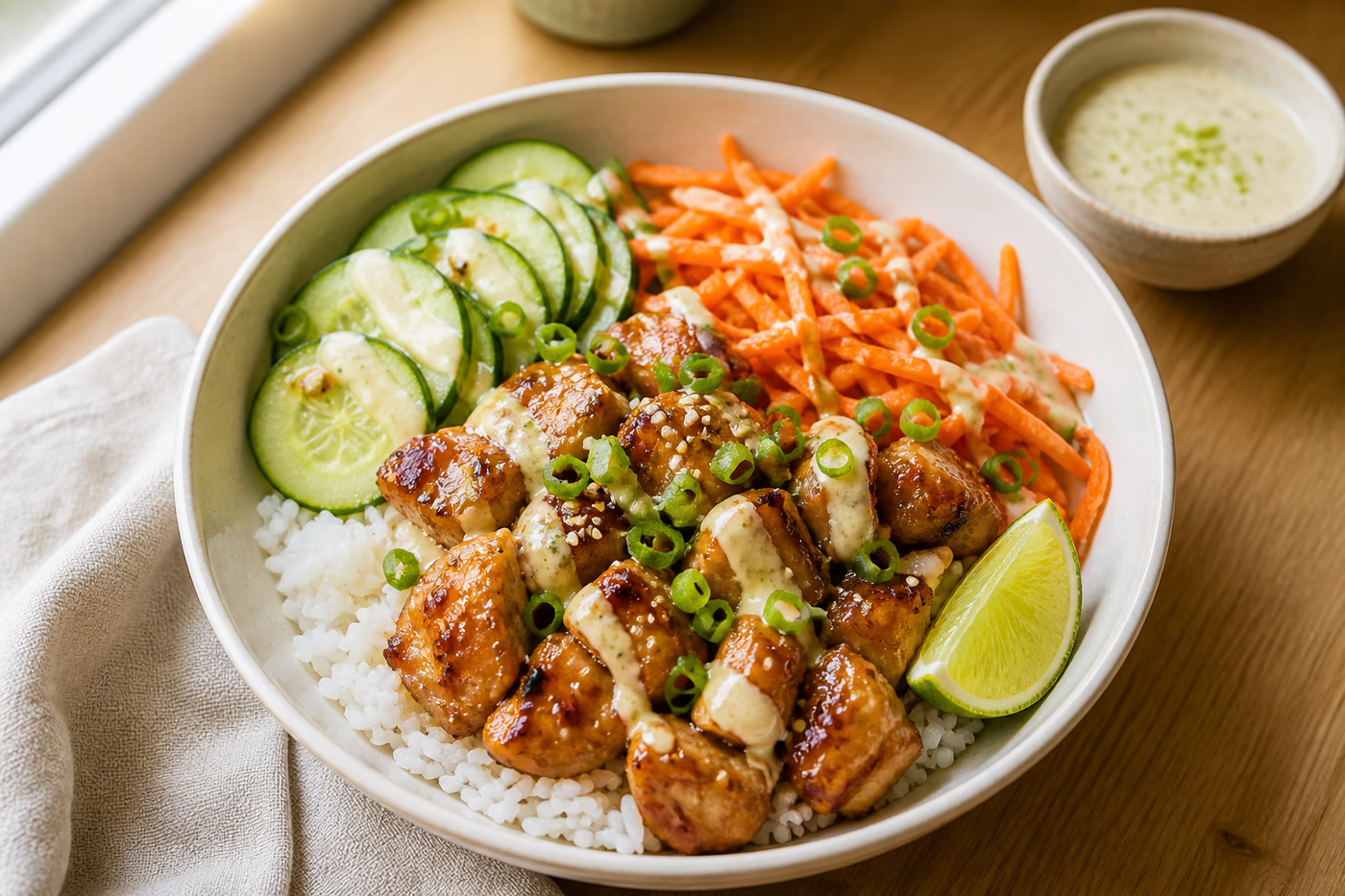
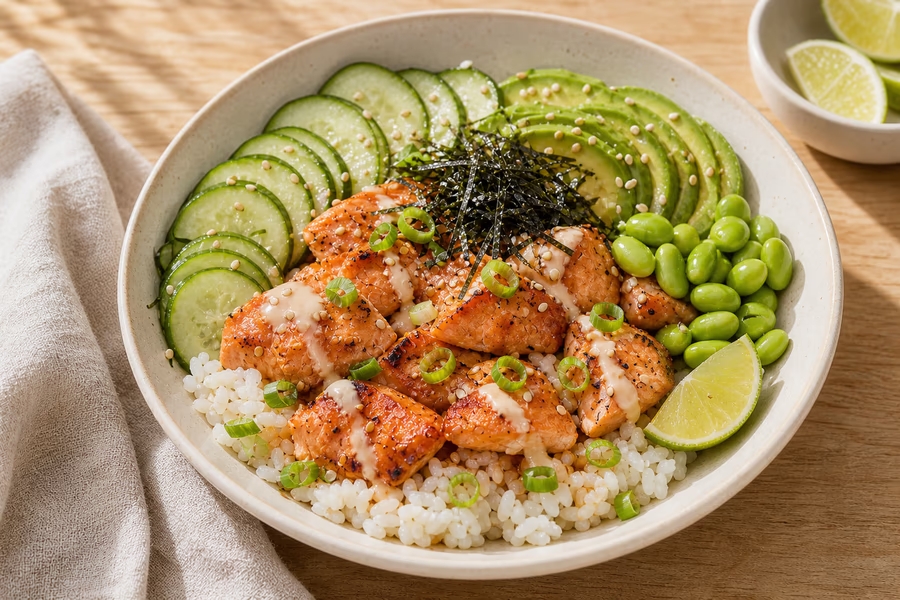
| Rice bowl | Warm and fluffy | chicken rice bowl or salmon rice bowl |
| Burrito bowl | Warm or room-temperature after safe reheating/cooling | burrito bowl recipe |
| Soup filler | Separate or slightly dry | vegetable soup or lentil soup |
| Flexible grain base | Any safe cooked rice | grain bowl recipes |
If your rice feels dry but is safely stored, add sauce, broth, or a steamy reheat. If the storage history is unclear, do not rescue it with toppings. Use the leftover dinner map for food you still trust.
Let It Go
When to throw cooked rice out
Throw cooked rice out when the storage story is weak. This is not wasteful; it is the boundary that makes leftovers feel safe enough to use.
- It sat at room temperature for more than 2 hours, or more than 1 hour in hot weather.
- It cooled in a deep pot or rice cooker and you do not know how long it stayed warm.
- It has been in the fridge longer than 3 to 4 days.
- The date is missing and no one remembers when it was cooked.
- The container includes meat, seafood, eggs, dairy sauce, or other ingredients with a shorter safe window.
- It smells odd, looks slimy, has mold, or makes you pause for any reason.
Tiny Routine
The 30-second rice storage habit
This is the small habit that keeps rice useful without turning your kitchen into a meal-prep operation.
- Portion: scoop rice into shallow containers before cleanup starts.
- Date: add tape with the cooked date.
- Assign: write or decide one next use: fried rice, bowl, soup, freezer.
- Place: put one container in the fridge landing zone and freeze the rest if you will not use it soon.
It pairs neatly with the five-minute fridge and freezer check. Rice is exactly the kind of small leftover that can turn into dinner if you can see it in time.
FAQ
Cooked rice storage questions
Is day-old rice safe for fried rice?
Yes, if it was cooled quickly, refrigerated promptly, and kept cold. Day-old rice fries well because it is drier than fresh rice, but dryness is a texture advantage, not a safety shortcut.
Can I leave rice in the rice cooker overnight?
No. Do not treat the rice cooker as storage. Unless you know the rice has been held safely hot the whole time, move cooked rice into shallow containers and refrigerate it promptly.
Can I eat cooked rice cold?
Yes, if it was cooled quickly and stored safely in the refrigerator. Cold rice is useful for salads and bowls, but do not use rice that sat out too long before chilling.
Should I rinse cooked rice before storing it?
No. Rinsing cooked rice can make it waterlogged and does not fix unsafe storage. Store it properly after cooking, then add moisture during reheating if the rice is dry.
Can I reheat rice more than once?
For a cautious rice-specific practice, reheat each portion only once. Take out only what you plan to eat, and keep the rest safely chilled or frozen.
Does brown rice last longer than white rice after cooking?
Use the same 3 to 4 day refrigerator rule for cooked brown rice. Its texture and flavor may change differently, but it is still a perishable cooked grain.
Next
Give the rice a dinner plan
If the rice is already safely chilled, make easy fried rice, a chicken rice bowl, a salmon rice bowl, or a burrito bowl.
If the real issue is leftover confidence, keep safe meal prep for home cooks and the leftover landing zone nearby. Rice gets easier when the whole fridge has a small system around it.