
Start Here
A good stir-fry is mostly about order
A vegetable stir fry can be the fastest useful dinner in the kitchen, or it can turn into a wet pile of vegetables with sauce at the bottom of the pan. The difference is not owning a wok. It is giving the vegetables room, adding them in the right order, and waiting to sauce the pan until the food is almost done.
Think of this as a skillet map, not a strict recipe: base + vegetables by timing + sauce + protein helper + finish. Once those parts are ready, dinner can move quickly without becoming frantic.
The Formula
Build it before the heat goes on
The pan work is short, so do the quiet jobs first. Start the rice or noodles. Mix the sauce in a cup. Cut vegetables into pieces that can cook at roughly the same pace. Keep a plate near the stove for anything that needs to come out and go back in.
| Part | What To Use | Why It Matters |
|---|---|---|
| Base | Rice, noodles, leftover grains, cauliflower rice, or a warm tortilla | The stir-fry cooks fast, so the base should be ready first. |
| Firm vegetables | Broccoli, carrots, green beans, cauliflower, cabbage stems | They need the first turn in the pan so they soften without going limp. |
| Quick vegetables | Bell peppers, zucchini, snap peas, mushrooms, cabbage leaves | They keep better texture when added after the firm vegetables get a head start. |
| Greens | Spinach, bok choy leaves, kale, chard, scallions | They need only a short finish so they stay bright. |
| Sauce | Soy sauce or tamari, vinegar or lime, garlic or ginger, a little sweetness, starch if needed | It should coat the food, not drown it. |
| Finish | Sesame seeds, peanuts, herbs, scallions, chili crisp, lime | Texture and brightness make the bowl feel done. |
Skillet Method
Use the widest pan you have
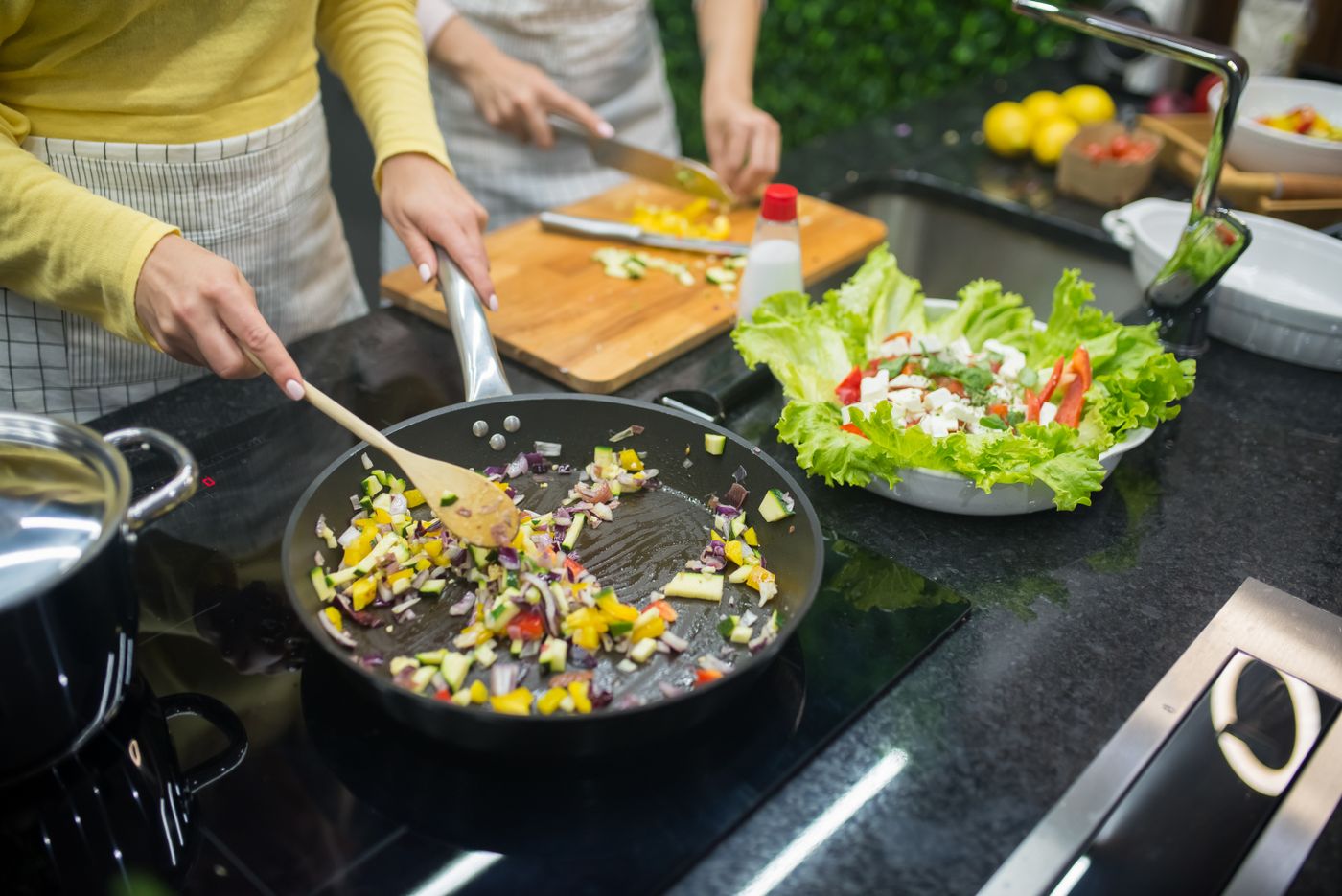
A 12-inch skillet is better than a small deep pan because moisture can leave the vegetables instead of collecting around them. Cast iron and stainless steel are useful here, but the bigger point is surface area. If the pan looks full before the vegetables start cooking down, split the batch.
- Dry the vegetables. Wet vegetables steam first. Pat washed vegetables dry, and drain canned or thawed ingredients well.
- Cook protein first if you are using raw meat or seafood. Move it to a clean plate, then cook the vegetables. Add it back only when it is safely cooked and ready to be coated.
- Start with the firm vegetables. Give carrots, broccoli, green beans, or cauliflower the first few minutes.
- Add quick vegetables next. Bell peppers, zucchini, mushrooms, snap peas, and cabbage need less time.
- Add greens at the end. Stir them in when the pan is almost done.
- Sauce last. Turn the heat down or off, pour in the sauce, and toss until glossy.
Sauce
Make a sauce that coats, not a puddle
For one skillet of vegetables, start with a small sauce and add more only if the base needs it. A useful weeknight sauce has four jobs: salty, bright, aromatic, and glossy.
| Job | Easy Options | What To Watch |
|---|---|---|
| Salty | Soy sauce, tamari, coconut aminos, miso thinned with water | Use less if your protein or bottled sauce is already salty. |
| Bright | Rice vinegar, lime juice, lemon juice, a splash of pickle brine | Add enough to wake up the pan, not enough to make it sharp. |
| Aromatic | Garlic, ginger, scallions, chili crisp, sesame oil | Garlic can burn fast, so sauce is often the safer place for it. |
| Glossy | A small spoonful of cornstarch slurry, tahini, peanut butter, or the starch from noodles | Gloss is helpful; heaviness is not. |
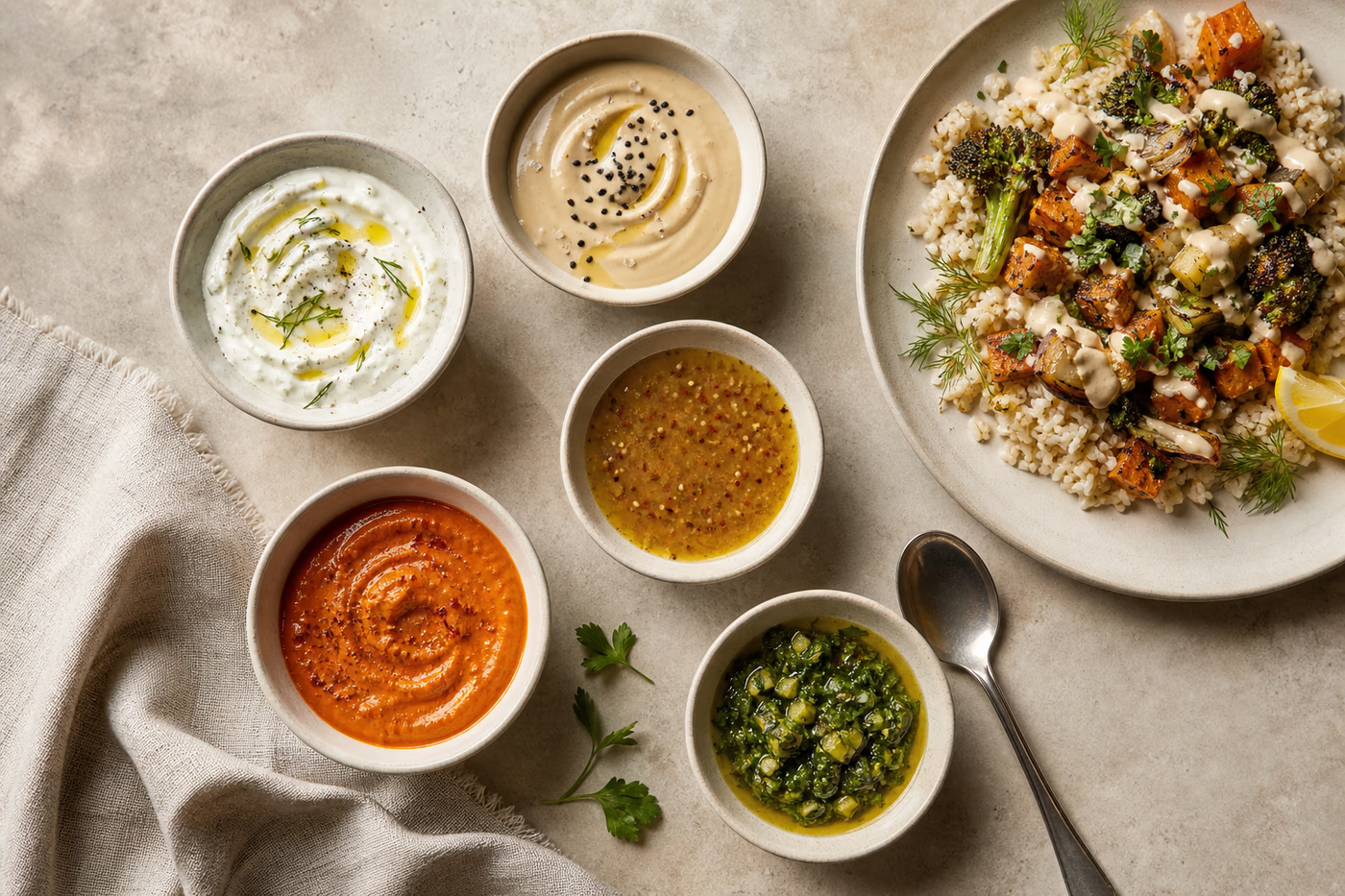
For more ways to finish a bowl, use the small sauce guide.
Dinner Map
Five ways to turn the pan into dinner
| Vegetables | Base | Protein Helper | Finish |
|---|---|---|---|
| Broccoli, carrots, bell pepper | Rice | Tofu, egg, chicken, or edamame | Sesame seeds and lime |
| Cabbage, mushrooms, scallions | Noodles | Egg, tofu, or leftover beef | Chili crisp and peanuts |
| Green beans, snap peas, carrots | Rice or quinoa | Shrimp, tofu, or cashews | Herbs and lemon |
| Frozen stir-fry vegetables | Rice | Edamame, tofu, or leftover chicken | Extra scallions and sesame oil |
| Zucchini, peppers, onion | Tortillas or rice | Black beans or eggs | Salsa, lime, and yogurt |
Frozen Vegetables
Frozen vegetables need room too
Frozen stir-fry vegetables are useful, but they bring water to the pan. Use a little more heat, avoid crowding, and let the first burst of moisture cook off before adding sauce. If the vegetables are sitting in liquid, pause before saucing; the sauce will only become thinner.
If the bag includes very different textures, such as broccoli, peppers, carrots, and water chestnuts, do not expect every piece to cook the same way. Aim for hot, bright, and not mushy. That is enough for a weeknight bowl.
Kitchen Safety
A few guardrails for add-ins
Vegetables are flexible; raw animal proteins are not. If you add chicken, meat, seafood, or eggs, cook them to a safe temperature for that food and keep raw juices away from cooked vegetables, rice, noodles, and serving plates.
For leftovers, reheat until steaming hot and 165 F in the center. If you are using leftover rice, cooked chicken, cooked vegetables, or cooked noodles, keep them cold before cooking and refrigerate extras promptly after dinner.
Make It Easier
What to read next
If the pan needs protein, use the pantry protein dinner map. If you want a fixed chicken-and-zucchini recipe instead of a formula, make the chicken and zucchini skillet. If you need a base that works with leftovers, use the pantry pasta map or set up the freezer backup box.
If the vegetables are cooked but the bowl tastes unfinished, go straight to the small sauce guide.
FAQ
Vegetable stir fry questions
Can I make vegetable stir fry without a wok?
Yes. Use the widest skillet you have, cook in batches if needed, and avoid crowding the pan. A wok is helpful, but surface area and order matter more in most home kitchens.
Why does my stir fry get soggy?
The usual causes are wet vegetables, a crowded pan, low heat, or adding sauce too early. Dry the vegetables, split the batch, and wait to sauce until the vegetables are nearly done.
What vegetables should go in first?
Start with firmer vegetables like carrots, broccoli, green beans, and cauliflower. Add quicker vegetables like peppers, zucchini, mushrooms, snap peas, and cabbage later. Add greens at the end.
How do I make vegetable stir fry a full meal?
Serve it over rice, noodles, grains, or tortillas, then add a protein helper such as tofu, eggs, edamame, beans, chicken, shrimp, or leftovers. Finish with something bright or crunchy.
Can I use frozen stir-fry vegetables?
Yes. Give them enough pan space and let extra moisture cook off before adding sauce. They may not get as crisp as fresh vegetables, but they can still make a useful dinner.